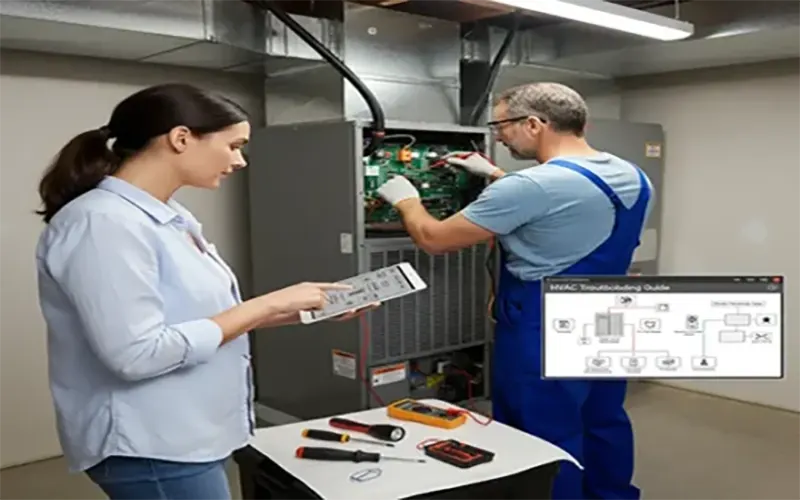
An HVAC (Heating, Ventilation, and Air Conditioning) system is the hardworking backbone of your home’s comfort, but when it falters, it can quickly turn into a source of frustration. Before you call a professional, understanding some common HVAC repair issues and basic troubleshooting steps can often save you time and money.
This guide covers some of the most frequent problems and provides a step-by-step approach to diagnosing them.
1. The System Isn’t Turning On
This is the most fundamental problem, but it has several surprisingly simple causes.
- Troubleshooting Steps:
- Check the Thermostat: Is it set to the correct mode (heat or cool)? Is the temperature setting correct? Is the thermostat getting power? Check if the batteries need to be replaced.
- Inspect the Breaker Box: A tripped circuit breaker is a common culprit. Check your electrical panel and look for a breaker that is in the “off” or middle position. If you find one, flip it all the way off and then firmly back on.
- Look for Safety Switches: Many HVAC systems have a safety switch, often near the furnace or air handler, that looks like a regular light switch. It might have been accidentally turned off. Check the furnace door panel as well; some units have a safety switch built into the door that prevents the system from running if the panel isn’t closed properly.
2. The System is Running, But Not Heating or Cooling Effectively
This is a classic efficiency problem. The system is working, but it’s not delivering the desired results.
- Troubleshooting Steps:
- Check the Air Filter: A clogged, dirty air filter is the number one cause of poor HVAC performance. A dirty filter restricts airflow, making the system work harder and less effectively. Change it monthly, especially during peak use seasons.
- Inspect Vents and Registers: Make sure all vents and return air grates are open and not blocked by furniture, rugs, or drapes. Blocked vents can disrupt the airflow and create pressure imbalances in your system.
- Examine the Outdoor Unit: For an air conditioner or heat pump, check the outdoor unit (the condenser). Make sure it’s free of debris like leaves, grass clippings, and dirt. A dirty condenser coil can’t efficiently release heat, reducing the system’s cooling power.
3. Strange Noises or Smells
Your HVAC system should operate relatively quietly. Unusual sounds or odors are often a sign of a problem.
- Common Noises and What They Mean:
- Squealing: This often indicates a worn-out fan belt or an issue with the motor bearings. A squealing sound from the blower motor can be a sign it needs lubrication or a replacement.
- Grinding or Scraping: This can be a sign of a serious motor problem. It could mean the bearings are failing or a part is rubbing against the fan. Turn the system off immediately and call a professional.
- Banging: A loose fan or a misaligned blower wheel can cause a banging sound. It could also indicate a more serious issue with the compressor.
- Common Smells and What They Mean:
- Burning Smell: This could be a sign of a dusty filter burning off, but it could also indicate a more serious electrical issue with the motor or wiring. Turn the system off and check the filter. If the smell persists, call an electrician or HVAC professional.
- Musty Smell: A musty or moldy odor often points to a clogged condensate drain line or the presence of mold or mildew in the ductwork. Pouring a cup of distilled vinegar down the drain line can help, but if the smell is persistent, you may need a professional cleaning.
4. The System Is Constantly Cycling On and Off (Short Cycling)
Short cycling means your HVAC unit is turning on and off in rapid, short intervals. This is bad for the system, as it puts a lot of stress on the compressor, and it’s bad for your energy bill.
- Possible Causes:
- Oversized Unit: If your unit is too big for your home, it will quickly cool or heat the space and shut off, only to turn back on a few minutes later.
- Thermostat Issues: A poorly placed or malfunctioning thermostat can cause short cycling.
- Refrigerant Leaks: In an AC unit, low refrigerant levels can cause the system to short cycle. If you suspect this, you will need a professional to find and repair the leak and then recharge the refrigerant.
When to Call a Professional
While these troubleshooting steps can help with minor issues, there are times when a professional is essential. You should always call a qualified HVAC technician if:
- You suspect a refrigerant leak.
- The circuit breaker keeps tripping.
- You hear grinding or a persistent banging sound.
- The system is old and has a history of problems.
- You need to install or repair electrical components.
Regular maintenance and timely repairs can keep your HVAC system running smoothly, efficiently, and safely for years to come.